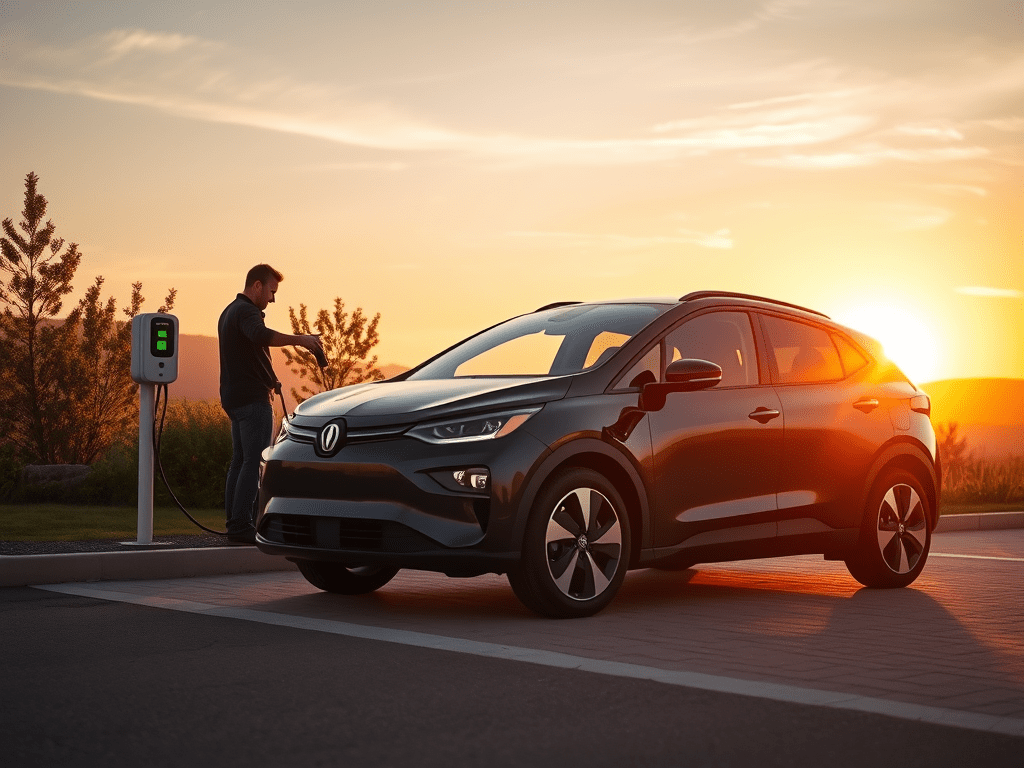
Making the leap to electric isn’t just about being modern or eco-friendly — it’s about upgrading how your vehicle fits into daily life.
From performance to cost, convenience to air quality, EVs quietly win on nearly every front. Once you switch, it’s tough to imagine going back.

💡 EVs Are Just Better — Day to Day
- ✅ Instant torque — no lag, just quiet acceleration
- ✅ Smarter tech — better displays, cameras, and over-the-air updates
- ✅ Quieter cabin — less engine rumble means better music and conversation
- ✅ Cleaner garage air — no tailpipe, no lingering fumes
- ✅ Simplified maintenance — no oil changes, belts, or exhaust work
You’re not just changing how you drive. You’re changing how driving fits your life.
🔋 Charging vs. Gas: Your Time Matters
One of the biggest myths? That charging an EV takes forever.
- 🔌 Plug-in time: ~10 seconds
- 🌙 Charging happens while you sleep
- ⛽️ Gas station detours: 15–20 minutes/week — always on your clock
With an EV, you refuel while living life. You don’t “wait” — you just wake up charged and ready.

🛣️ Road Trips: Surprisingly Smooth
Long drives with an EV are built for smart stops:
- 🚽 Break alignment — bathroom & snack stops match charging sessions
- 🔋 Fast chargers deliver ~100 miles in 20–30 minutes
- 🍔 Meal breaks = full battery with time to spare
- 🧊 Stay in your cabin while you charge — no standing in heat or cold pumping gas
It’s not about waiting. It’s about using that break smarter — and more comfortably.

💸 Real-World Cost Comparison: Hyundai Kona Gas vs. Electric
| Category | Kona Electric | Kona Gas |
| MSRP | ~$34,000 | ~$25,000 |
| Fuel/Charging | ~$2,500 (home charging) | ~$9,500 (gas @ $4/gal) |
| Maintenance | ~$1,500 | ~$3,500 |
| Insurance | Slightly higher | Lower |
| Total 5-Year Cost | ~$38,000–$40,000 | ~$38,000–$40,000 |
⚖️ Same total cost. Better performance. Cleaner ride.
🧠 Engineer’s Corner: Why EVs Crush ICE in Efficiency
Internal combustion engines (ICE) are complex — and only 20–30% of gas energy actually moves your car.
The rest is burned off as:
- 🔥 Heat
- 🔊 Noise
- 🛑 Idle waste (think drive-thrus and stoplights)
- 🌫️ Exhaust and unburned fuel
EV motors? They convert 85–90% of battery energy into motion — and they recapture energy with regenerative braking.
You reuse momentum. You skip the heat and fumes. You drive smarter.
🧪 Myth Busting: EVs vs. Gas
| 🚘 Myth | ✅ Reality |
| EVs are weak and slow | Most EVs out-accelerate gas cars — torque is instant |
| Charging is inconvenient | Happens overnight, not during errands |
| EVs don’t save money | Lower fueling + maintenance = long-term savings |
| Emissions are just shifted to the grid | Even on mixed grids, lifetime emissions are lower |
| EVs aren’t road trip capable | Smart stops and fast charging make road trips easy |
🩺 Doctor’s Note: The Garage Is Part of Your Home
Gas vehicles leave behind more than just tire marks:
- 🧪 Carbon monoxide
- 🧬 Benzene
- 🌫️ Fine particulates
EVs eliminate these indoor pollutants completely — and they’re quiet, too.
If you wouldn’t run a gas barbecue indoors, why normalize tailpipe fumes in your garage?
References:

📊 Survey Says: Most EV Drivers Never Go Back
The Global EV Drivers Alliance (2024) found:
- 🔢 92% of EV owners say they’ll never return to gas cars
- 🚫 Only 1% preferred going back to internal combustion
- ✅ Key reasons: lower costs, cleaner air, better performance
Once people switch, they don’t just adapt — they advocate.
🧭 When EVs Might Not Fit (Yet)
- 🏕️ Off-grid camping far from public chargers
- 🏘️ No home charging access, relying entirely on public networks


Real limitations. But for most drivers? EVs already fit better.
💡 Final Word
You’re not just switching how you drive — you’re switching to a cleaner rhythm.
Less noise. Fewer fumes. Smarter fueling. Same cost. Better everything else.
EVs aren’t futuristic anymore. They’re simply better.






 The Millennial Dad Survival Guide
Leave a comment