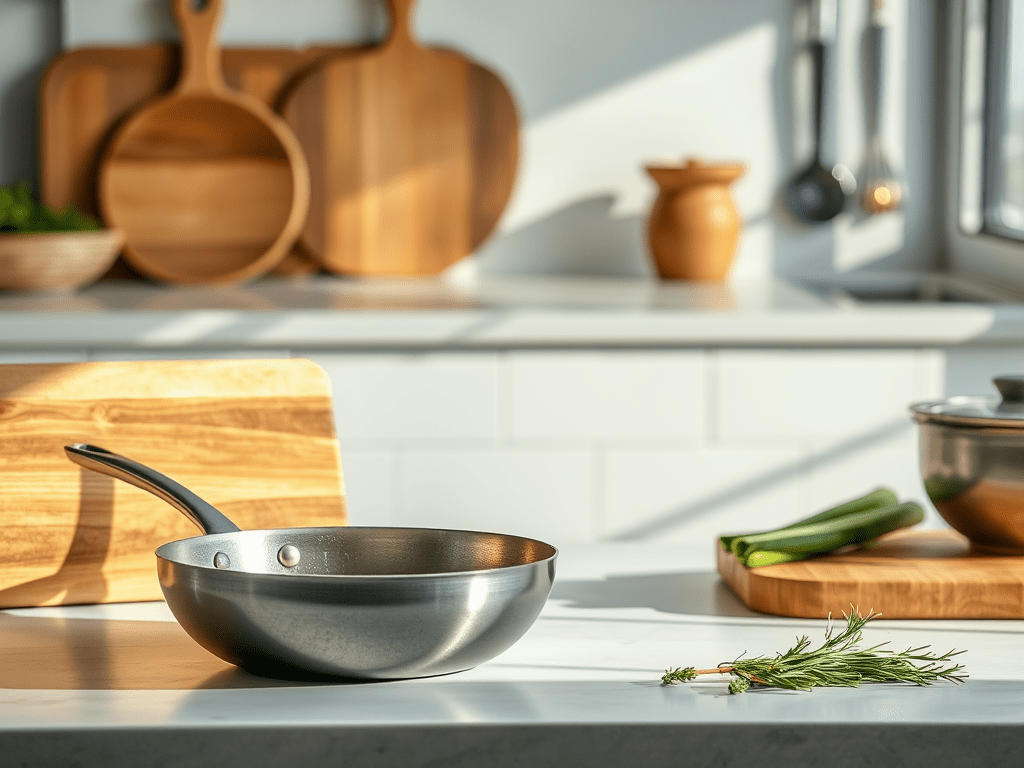
You don’t need to overhaul your entire kitchen overnight—but when items wear out or break, it’s the perfect time to upgrade to safer, longer-lasting alternatives. These swaps reduce exposure to harmful chemicals, improve food safety, and often save money in the long run. Here’s your high-yield guide to healthier kitchen gear.

🥇 Highest Priority Swaps (Do These First)
1. Ditch Non-Stick Cookware (Forever Chemicals, No Thanks)
Most non-stick pans contain PFAS (“forever chemicals”) that can leach into food, especially when scratched or overheated. Safer alternatives are affordable and built to last.
Upgrade To:
- Carbon Steel Skillet: Naturally non-stick when seasoned, great for everyday cooking
- Stainless Steel Skillet: Ideal for acidic foods (like tomato sauce) that react with carbon steel
- Cast Iron: A solid option if you don’t mind the weight—also naturally non-stick when seasoned
💡 Pro Tip: Season carbon steel or cast iron with a thin layer of oil after each use. It builds a slick surface and prevents rust.

2. Replace Plastic/Silicone Utensils
Plastic and silicone utensils can degrade over time, especially when exposed to heat. They’re unnecessary if you’re no longer using non-stick cookware.
Upgrade To:
- Stainless Steel Spatulas, Ladles, Tongs, and Whisks
- Wooden or Bamboo Tools for delicate surfaces or quieter cooking
🧠 Common Term: These are often called cooking utensils or kitchen tools—spatulas, ladles, turners, etc.
3. Use Wooden Cutting Boards (Toss the Plastic Now)
Plastic cutting boards shed microplastics with every chop—studies show they can release millions of particles annually. These fragments cling to food and are nearly impossible to avoid.
Upgrade To:
- Two Wooden Boards: One for produce, one for meat/fish
- Care Tips: Wash with hot water, dry upright, and re-oil monthly with food-safe mineral oil
💡 Why it matters:
Wood is naturally antimicrobial, easier on knives, and doesn’t leach chemicals. Plastic boards degrade quickly and harbor bacteria in knife grooves.
👨⚕️ Doctor’s Note:
This is one of the most direct ways microplastics enter your body. If you do one thing today—ditch the plastic board.

🥈 Medium Priority Swaps (Do As Items Wear Out)
4. Swap Plastic Storage for Glass or Stainless Steel
Even cold storage can lead to microplastic leaching over time. Glass and stainless steel are safer and more durable.
Upgrade To:
- Glass Jars and Containers with silicone or glass lids
- Stainless Steel Canisters for dry goods, snacks, or pantry staples

5. Watch Out for Non-Stick Countertop Appliances
Air fryers, waffle makers, and sandwich presses often sneak in non-stick coatings.
Upgrade To:
- Stainless Steel or Ceramic-Coated Appliances when replacing
- Check Labels: Look for “PTFE-free” or “PFAS-free” claims
6. Safer Food Covers and Freezer Storage
Plastic lids and wraps can leach chemicals when heated or frozen.
Upgrade To:
- Glass Containers with Silicone Lids
- Reusable Bowl Covers made of silicone or beeswax
Avoid Plastic Wrap for microwaving or freezing
🥉 Lower Priority Swaps (Still Worth Doing)
7. Ditch Plastic Silverware
Plastic utensils are wasteful and can leach chemicals into hot food.
Upgrade To:
- Stainless Steel Flatware for everyday use
- Bamboo or Compostable Options for picnics or parties
8. Use Ceramic Plates and Bowls
Plastic dishware can degrade over time and isn’t microwave-safe.
Upgrade To:
- Ceramic or Porcelain Dishware
- Glass Bowls for mixing, serving, and microwaving

 The Millennial Dad Survival Guide
Leave a comment