Because drywall is fragile, your confidence is shakier, and you don’t want to explain to your partner why the bathroom light no longer works.

Why This Matters
You want to hang a shelf, a mirror, or that framed photo of your kid dressed as a dinosaur. But behind that innocent-looking wall could be a jungle of wires, pipes, and regrets. This guide helps you hang things securely—without turning your wall into Swiss cheese or your house into a fire hazard.

🧰 What You’ll Need
- Stud finder (with electrical detection)
- Painter’s tape or pencil
- Wall anchors or toggle bolts (for drywall installs)
- Screws and screwdriver
- Level
- Optional: Drill and pilot bits
- Optional: Awl, bent coat hanger, or dull probe
🩺 Doctor’s Note
Your walls aren’t just blank canvases—they’re hiding arteries (pipes) and nerves (wires). Drilling blindly is like doing surgery without imaging.
And remember: even if you’re drilling into a stud, that doesn’t mean you’re completely safe. Pipes and wires often pass through studs to get from Point A (the circuit panel) to Point B (your bathroom light). So choose screw length wisely—typically 1½” (or a little shorter) screws are enough to bite into the stud without playing electrical roulette. (Typical residential dry wall is 1/2” or 5/8” so the screw would bite 1” or less into the stud).
🛠️ Step-by-Step: Hang Without the Headache
- Scan Before You Stab
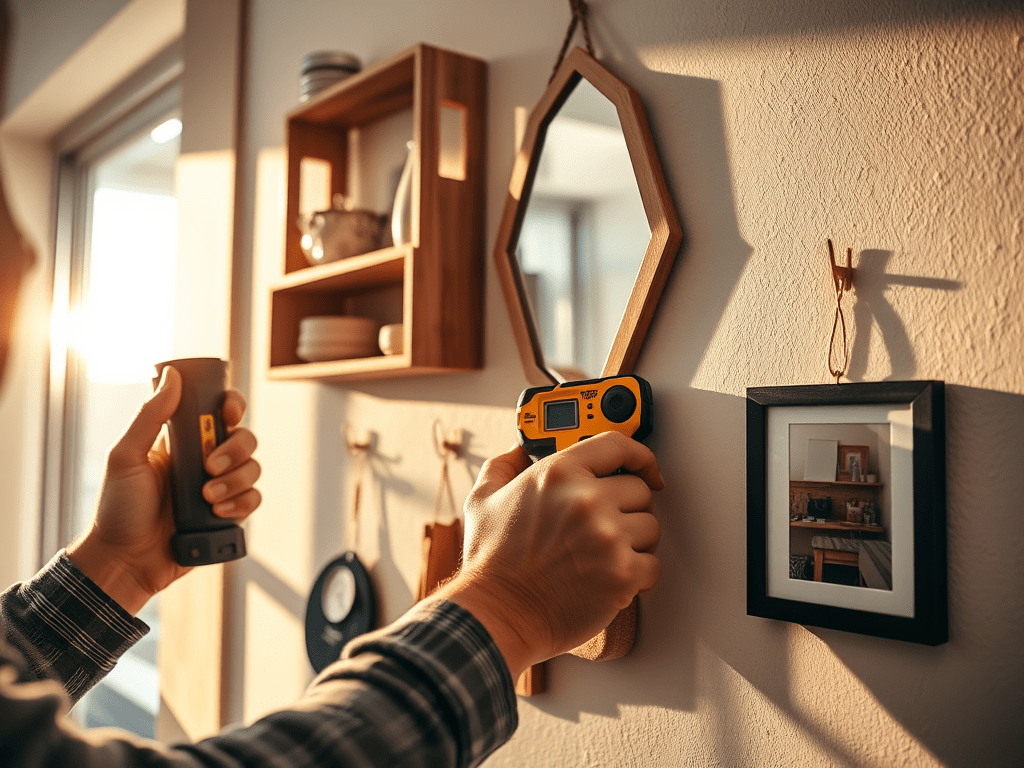
Use a good stud finder that detects wood, metal, and live wires. Mark key locations with painter’s tape. - Find the Stud (No, Not You)
Heavy stuff should anchor into a stud. - No Stud? No Problem.
Use wall anchors or toggle bolts rated for the item’s weight. - Pilot Holes Are Your Friend
Especially near edges or if you’re using anchors. They keep things clean, level, and less likely to crack. - Level Up
Unless you’re curating an abstract gallery wall, double-check your work with a level before sinking screws. - Hang It & Admire
If it’s still on the wall after 10 seconds—and nothing’s leaking or sparking—you crushed it.
⚠️ The Quadruple Check Method (For High-Risk Walls or High-Consequence Dads)
When you’re mounting something heavy, sentimental, or positioned above anything important, quadruple-check like a cautious legend:
- Scan with a Stud Finder
- Confirm with a Magnet
A neodymium magnet will stick to drywall nails or screws—usually placed into studs. Where it clings, you likely found a winner. - Feel It Out (Literally)
Drill a shallow, wide hole (~¼”), then use a bent coat hanger or dull object to gently explore behind the drywall. You’re going to cover this with the item you’re hanging so it’s not a big deal to have a hole here. - Mind Your Depth
Pipes and wires can pass through studs.
👉 Use screws no longer than 1½” to avoid breaching any unseen surprises.
🧠 Dad Tip: If your wall job ends with a soggy towel, flickering lights, and a panicked Google search for plumbers—your method needed more steps. Quadruple check, always.
🧯 Bonus Prep: Just in Case…
Murphy’s Law loves home improvement. So before your screwdriver gets near a wall:
- Know where your circuit breaker is. Trip it? Reset it fast. Better than fumbling in the dark and wondering where your kids put the flashlights.
- Know where your main water shutoff is. Pipes aren’t just passive background actors—they fight back. One nick and you’ll be swimming in consequences.







 The Millennial Dad Survival Guide
Leave a comment