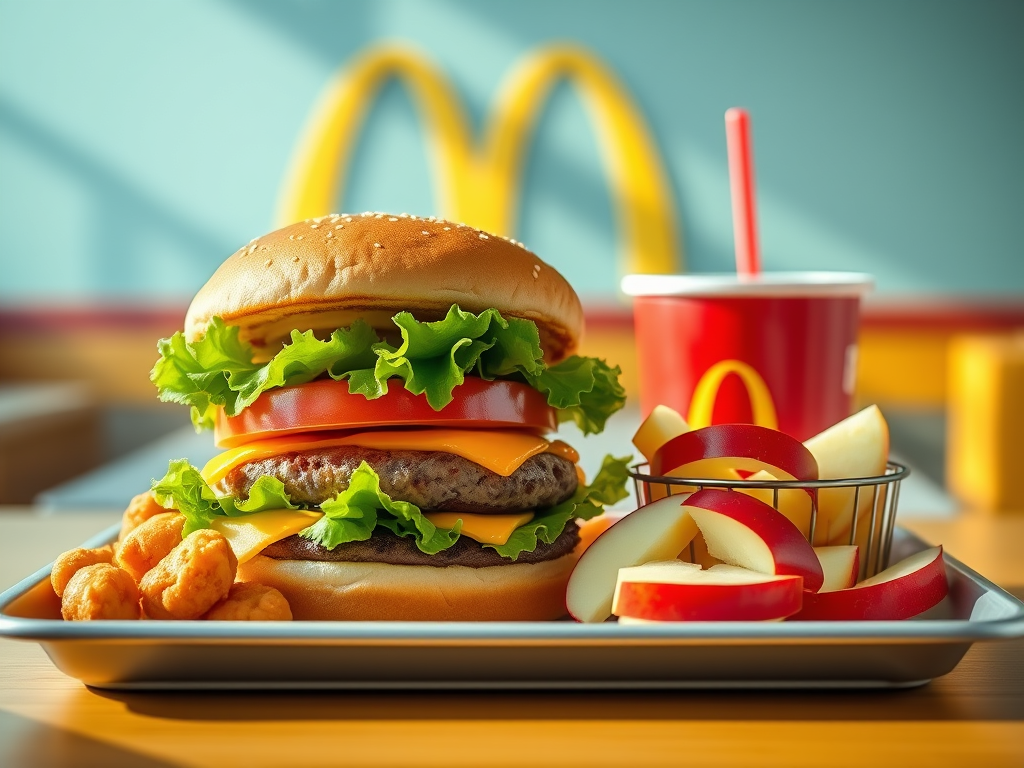
When the golden arches are the only option, the goal isn’t perfection — it’s damage control.
McDonald’s used to offer salads, grilled chicken, wraps, and a few “healthy‑ish” items. Those days are gone. The modern menu is built almost entirely around refined flour, fried starch, sugary sauces, and ultra‑processed proteins. This guide helps you walk away functional, not wrecked.
🟥Why McDonald’s Is Tough
The menu lost its vegetables, lean proteins, and whole‑food sides — so we shift to damage control.
A few key changes make the current menu uniquely challenging:
- no salads → no real vegetables
- no grilled chicken → no lean protein
- no whole‑food sides → no fiber
- more fried items → more oxidized oils
- more sugary drinks → bigger glucose spikes
- breakfast sugar bombs (oatmeal = 31g sugar)
This isn’t a place to “eat healthy.” It’s a place to minimize metabolic damage until you reach your next stop with real food.
🟧 Least‑Bad Choices (Your Damage‑Control Playbook)
Not healthy meals — strategic compromises that keep you functional.
🥇 1. The Customized Daily Double (Best Overall Choice)
This is the closest thing McDonald’s has to a balanced meal.
How to order it:
- Daily Double (comes with lettuce + tomato; the single hamburger doesn’t include any vegetables).
- Add extra lettuce + tomato
- Skip the sauce/mayo
- Ask for a lettuce wrap (or remove the bun yourself)
- Optional: ask for one beef patty instead of two
Why it works:
- Lettuce + tomato = the only real vegetables available
- Skipping sauce avoids the sugar‑oil combo
- Lettuce wrap reduces the glucose spike
- Beef is less processed than the fried chicken patty
🟦 2. 4‑Piece Nuggets + Apple Slices
Portion control + protein + fruit instead of fries.
Not ideal, but better than a full fried meal.
- small protein dose
- manageable calories
- avoids deep‑fried starch
- apple slices give a little fiber
🍳Breakfast:
Egg‑based items = protein + satiety without deep‑fried starch.
🌯 Sausage Burrito
- lower refined carbs than the McMuffin
- peppers + onions = tiny bit of vegetables
- no deep frying
- higher saturated fat
🥚 Egg McMuffin
- protein + modest carbs
- minimal sugar
- no deep frying
- still a reasonable choice
🍳 The Big Breakfast Hack: Scrambled Eggs Only
Pure protein + fat = stable energy without the glucose crash.
How to order: “Big Breakfast — just the scrambled eggs, please.”
Why it works:
- no refined carbs
- no deep‑fried starch
- no sugary sauces
- actually filling
Dietary cholesterol isn’t the main driver of blood cholesterol for most people — endogenous production is.
What to Drink
Best drinks: water, unsweetened iced tea, or black coffee.
Skip: soda, sweet tea, frappes, smoothies.
❌ What Not to Order (And the Metabolic Reason Behind Each One)
These are the glucose bombs, oil traps, and ultra‑processed landmines.
1️⃣ Big Mac
- enriched flour bun → fast glucose spike
- two patties → high saturated fat + sodium
- Big Mac sauce → soybean oil + sugar
- processed cheese → more sodium
MD Verdict: Not MD approved.
2️⃣ Chicken McNuggets
- enriched flour breading
- deep‑fried in oxidized oils
- additives + “natural flavors”
- acrylamide + advanced glycation end-products (harmful compounds) from frying
MD Verdict: Occasional treat at best.
3️⃣ French Fries
- refined starch
- oxidized frying oil
- additives + flavoring agents
MD Verdict: Enjoy rarely, not routinely.
4️⃣ Fruit & Maple Oatmeal
- 31g sugar (more than a Snickers)
- brown sugar + sweetened cream
- sugary “maple” flavoring
- dried fruit + added sugar
- no protein → hungry again fast
MD Verdict: Hard pass.
❗ If You Order the Big Mac Combo, Here’s What You’re Putting Into Your Body
This is the real metabolic load — calories, fat, sugar, sodium, and carbs — from the featured favorite.
Big Mac Combo — Full Nutrition Breakdown
| Item | Calories | Total Fat | Saturated Fat | Carbs | Sugar | Protein | Sodium |
| Big Mac | 590 | 34 g | 11 g | 46 g | 9 g | 25 g | 1,010 mg |
| Medium Fries | 320 | 15 g | 2.5 g | 43 g | 0 g | 5 g | 260 mg |
| Medium Coke | 210 | 0 g | 0 g | 58 g | 58 g | 0 g | 15 mg |
| TOTAL | 1,120–1,170 | 49 g | 13.5 g | 147 g | 67 g | 30 g | 1,285 mg |
What this means for your body:
- 1,100+ calories → more than half a day’s energy for many adults
- 49 g total fat → nearly a full day’s worth if you’re aiming for heart‑healthy intake
- 13.5 g saturated fat → ~70% of the recommended daily limit
- 147 g carbohydrates → equivalent to ~10 slices of white bread. Nearly all 147 g of carbohydrates come from refined starch or liquid sugar — none from whole‑food sources.
- 67 g of these are sugar → almost 17 teaspoons
- 1,285 mg sodium → over half the daily recommended limit
- Unknown amount of additives / flavors
This combo delivers a triple metabolic punch: fast carbs + fried oils + liquid sugar.
🩺 Doctor’s Note: The Real Goal at McDonald’s
Not perfection — just avoiding the worst metabolic hits until you reach real food.
You can still walk away without wrecking your day if you:
- avoid fried items
- skip sugary drinks
- choose the simplest, least processed options
- add vegetables wherever possible (even if it’s just lettuce + tomato)
After a quick “snack” at McDonald’s, aim for your next stop to include whole grain, protein, and produce so you can reset.
 The Millennial Dad Survival Guide
Leave a comment