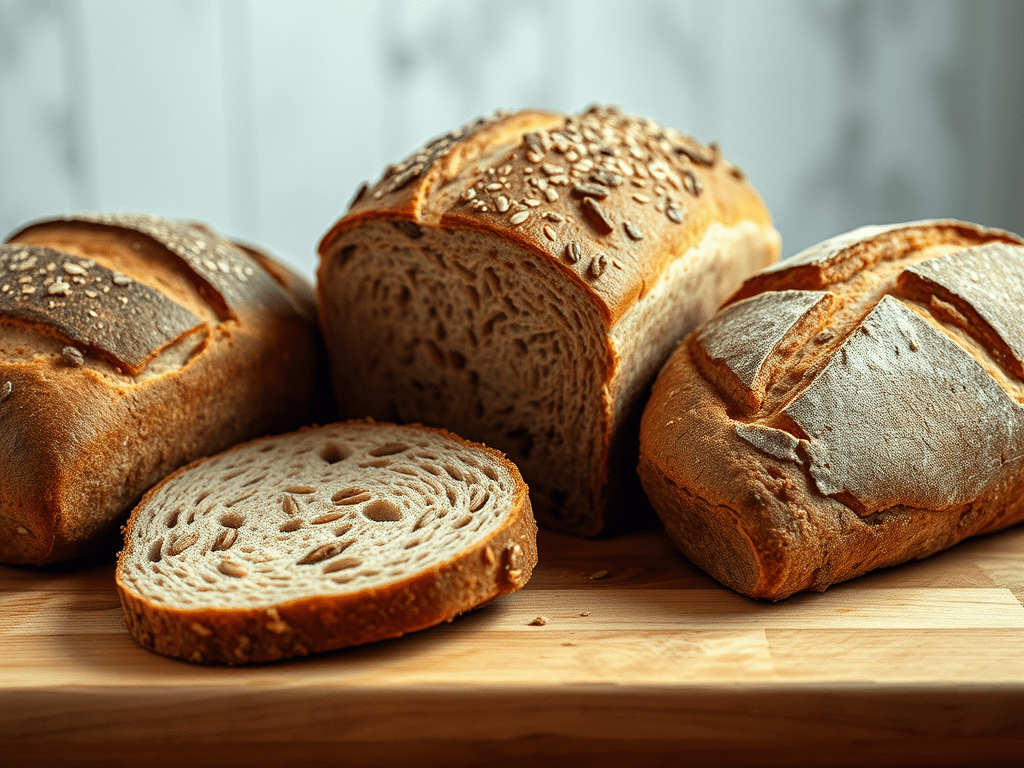
Most grocery store bread is a nutritional magic trick: it looks brown, it says “multigrain,” it has a picture of a barn on the front, it says “Artisan”… and then you flip it over and realize it’s basically cake that went to Whole Foods once.
If you want bread that actually supports metabolic health, digestion, and stable energy, the rules are simple and brutally consistent.
🌾 Whole Grain or Nothing
If the first ingredient isn’t 100% whole wheat or whole grain, it’s refined flour — and it’s benched.
Red flags that mean “this is white bread in disguise”:
- “Wheat flour”
- “Enriched flour”
- “Multigrain”
- “Bleached”
If the label is trying too hard to look rustic, it’s lying.
⚠️ Why Refined Flour Is Unhealthy
Refined flour (a simple carbohydrate) is basically starch with all the healthy parts removed. When you strip away the bran and germ, you lose:
- fiber
- micronutrients
- healthy fats
- antioxidants
What’s left digests very quickly, causing:
- a fast glucose spike
- a big insulin surge
- a crash that leaves you hungry again
Without fiber to slow things down, refined flour hits your bloodstream like a firehose instead of a steady drip.
Whole grains (complex carbohydrates) — especially sprouted or fermented — avoid all of that by keeping the structure, nutrients, and fiber intact.
🚫 No Added Sugar
Bread does not need sugar to rise. If sugar is added, it’s there for taste or browning — not your health.
Look for 0 g added sugar. Even seemingly healthy brands such as Dave’s Killer Bread often add 4–5 grams per slice.
🧾 The Ingredient List Test
Healthy bread has very few ingredients. If the ingredient list is so long it needs its own zip code, that’s not bread — that’s a science experiment with a crust.
You want:
- whole grain flour
- water
- salt
- yeast or starter
- seeds (bonus)
You don’t want:
- emulsifiers
- dough conditioners
- preservatives
- added sugar
- seed oils
- colorings
If the ingredient list wraps around the package like a CVS receipt, it’s benched.
🌱 Sprouted Grains Are Even Better
Sprouting:
- breaks down starch
- increases nutrient availability
- improves digestion
Sprouted bread is the overachiever of the bread world.
❄️ The Freezer Aisle Bonus: Resistant Starch
Ezekiel and other sprouted breads are usually sold frozen, and that’s not a downside — it’s a tiny metabolic upgrade.
Freezing → thawing → toasting increases resistant starch, which:
- slows digestion
- lowers glycemic impact
- improves satiety
It’s not a miracle — it won’t turn white bread into a superfood — but it’s a nice little “health tax refund” on bread you were already choosing for the right reasons.
If your bread comes frozen, congratulations: you’re already shopping in the part of the store where the real bread lives.
🍞 Sourdough Beats Regular Bread
Real sourdough fermentation:
- lowers glycemic impact
- improves digestion
- reduces gluten concentration
- naturally extends shelf life
🥐 A Reality Check on “Specialty” Breads (Croissants, Baguettes, Brioche, etc.)
These breads are delicious — no argument there — but nutritionally they live on the opposite end of the spectrum from sprouted, pumpernickel, and whole grain sourdough.
Croissants
- refined white flour
- lots of butter
- very low fiber
- high in fast‑absorbing starch + fat
A glucose and triglyceride spike wrapped in flaky layers.
Baguettes
- traditionally 100% refined white flour
- very low fiber
- high glycemic index
Even “wheat baguettes” are usually just white flour with a tan. True whole grain baguettes exist, but they’re rare and don’t resemble the classic airy French version.
Brioche
- refined flour
- added sugar
- butter or oil
- eggs
Basically dessert in loaf form.
🧬 Macronutrient + Glycemic Index Comparison (per slice or equivalent serving)
| Bread Type | Calories | Carbs | Fiber | Protein | Fat | Sugar | Glycemic Index |
| Sprouted Whole Grain | ~80 | ~15 g | ~3 g | ~4–5 g | ~0.5 g | 0 g added | ~36 |
| Pumpernickel | ~65–80 | ~14–16 g | ~2–3 g | ~2–3 g | ~0.5 g | 0–1 g natural | ~41 |
| Whole Grain Sourdough | ~90–100 | ~18–20 g | ~2–3 g | ~4 g | ~0.5–1 g | 0–1 g natural | ~53 |
| White or Wheat Bread | ~70–80 | ~13–15 g | 0 | ~2–3 g | ~1 g | 2–3 g added | ~75 |
| Croissant | ~230 | ~26 g | 0 | ~4 g | 12–14 g | ~4–6 g | ~67 |
🧩 Quick Interpretation
- Sprouted = lowest GI + highest nutrient density
- Pumpernickel = slowest digestion, extremely low GI
- Whole grain sourdough = moderate GI + best digestion (and often the best tasting)
- White/wheat bread = highest GI, lowest fiber, fastest glucose spike
- Croissant = refined starch + high saturated fat = glucose + triglyceride spike
Fiber + whole grains + fermentation = slow, steady glucose
Refined flour + added sugar = glucose rollercoaster
🏆 Top 3 Healthiest Breads You Can Buy
1. Sprouted Whole Grain (Ezekiel style)
The king of healthy bread. If bread had a CrossFit membership, this would be it.
2. Traditional Pumpernickel (German rye bread)
Not the soft, sweet American version — the dense, dark rye brick that could double as a doorstop. Your pancreas will thank you.
3. Whole Grain Sourdough
The best “normal tasting” bread for health. If you want something your kids will actually eat without staging a protest, this is the one.
❄️ A Practical Note: Healthy Bread Spoils Faster
These breads don’t contain preservatives, stabilizers, or added sugars — which means they behave like real food. They go stale or mold faster because even bacteria recognize them as food.
That’s why the healthiest options are often in the freezer section. Meanwhile, the soft, sweet, shelf‑stable loaves in the bread aisle stay “fresh” for weeks because even microbes are like, “Nah, I’m good.”



 The Millennial Dad Survival Guide
Leave a comment